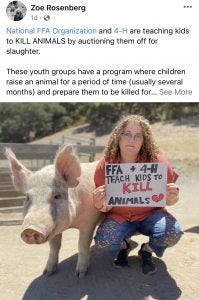




If you’re a part of agriculture, chances are you’re no stranger to people saying that this industry (or at least parts of it) are bad. Some people think that the food system is broken (more on that here) and that agriculture has a disproportionately negative impact on the environment — there are so many misconceptions about ag. Some of this is due to a lack of knowledge about agriculture, while some of this is due to bias against agriculture.
Bias can be a prejudice in favor of or against something. Some bias is unconscious, meaning that you don’t even realize that you hold stereotypes, beliefs or subconscious attitudes toward people or something.
So let’s dig into why some people are biased against agriculture.
Bias normally comes from experience and a person’s background. For example, if you were raised in a house where you were allowed to only buy “non-GMO” products at the grocery store, you’re more likely to continue buying things with a “non-GMO” label. This stems from years of experience avoiding GMOs and likely causes you to assume that GMOs are bad, or that you should at least be wary of them. (Spoiler alert: This isn’t true!)
Bias can also appear unconsciously. For example, it may be that the people we’re around are making comments about a topic (keeping with the GMO theme, saying “GMOs are bad”), which can cause you to believe it, or at least put more thought to that person’s ideas.
Something interesting that’s been found to cause bias is that there is a lack of positive (and even neutral) statements about agriculture in literature today. Studies have found that there are biased statements in popular magazines and that this bias tends to have a negative connotation towards agriculture. This shows that people can unconsciously become biased against agriculture just through reading magazines. More studies have shown that similar things are happening in middle and high school textbooks.

Some bias against ag has to do with education — or a lack of it. According to the National Center for Agricultural Educators, only 6 percent of American schools have ag education programs. This same study found that there is a lack of experienced and available ag teachers. These ag education programs are generally offered in high schools and as electives. Yes because of these educational deserts, many students don’t get the opportunity to learn about ag.
This could create bias in students who don’t take these ag classes since they aren’t learning about ag in a positive or neutral light. It also causes students to think that the only part of agriculture is farming, which is so far from the truth!
Another interesting fact is that Americans believe that less than half (46 percent) of U.S. farms are family owned — when really 98 percent of U.S. farms are family owned and operated. This on its own isn’t bias, but it could absolutely cause people to be biased against larger farms. Lots of people would rather support local and family-owned farms when given the choice. These larger farms are often family owned and operated, but people don’t often realize it.
Food labeling can be another source of bias and misconceptions. Because of regulated withdrawal periods, you will never find any meat in the U.S. that contains antibiotics — it’s a simple fact. But, some companies choose to add “No Antibiotics” labels to their products, causing people to believe that other brands must contain antibiotics. People become biased toward brands that use this label and against brands that don’t use a “No Antibiotics” label. This also creates distrust in our food system.

People are more removed from the farm than ever before. Our increasing urbanization means that fewer people are directly involved in food production. There are also less people exposed to agriculture, which is another contributor to bias.
One thought that is often shared between people in agriculture and people biased against agriculture is that ag can improve. Agriculture is always working to improve things like sustainability, animal welfare, technology, food labeling and more. The difference is that people in ag recognize this, but people who are biased against ag don’t always recognize or believe that ag is committed to continually improving.
If you start looking around you, you’ll probably see bias everywhere. We all have biases, and it’s important to recognize these in ourselves and others. Bias is a process that takes years to build, and education is a part of the solution to ensuring people do not become biased against agriculture. As a whole, agriculture needs to bridge the gap between the individuals that are a part of ag and the people who do not have much ag knowledge or experience.
Michelle Miller, the “Farm Babe,” is an internationally recognized keynote speaker, writer, and social media influencer and travels full time to advocate for agriculture. She comes from an Iowa-based row crop and livestock farming background and now resides on a timber farm in North Central Florida.