



I grew up in Spokane, Washington, which has a population of more than 200,000 people. All of my food came from the store. I didn’t know that I could purchase food directly from a farmer until well into adulthood. Farmers markets were a revolutionary discovery for me.
When I decided to pursue farming as a side hustle, I had no idea where start. But I’m a big believer in the pursuit of knowledge, so that is what I did. I pursued knowledge. I found seminars, webinars, conferences, and classes through various agricultural enterprises in my area — and I went to all of them.
I read books, blogs, articles, research, whatever I could get my hands. Ultimately, I pursued a Master’s of Science in Agriculture on the Plant Health Management track at Washington State University. I’m glad I did it, it was an accomplishment to finish it, but … and yes, there is a “but” … I’m still searching for the meaning of that education. Though it taught me follow-through and how to be discipline myself to work, I got more practical experience struggling through the first production seasons on my farm than I did learning about the nuances of soil science or discussing whether a study was set up properly.
A New York Times article by Paul Tough from September 2023 titled, Americans are Losing Faith in the Value of College. Whose Fault is That?, explores the lack of value Americans are putting into institutions of higher education. In the early 2010s students and parents alike agreed that higher education had value and positively impacted the country. A college degree meant higher earning potential for graduates.
But that’s not automatically true anymore. And I’ve been wondering how true that is in agriculture.
Higher education in agriculture is certainly not without positives. The reality is that the majority of research in agricultural originates from universities. Innovation and technological advances come out of all the research, and, most certainly, that benefits production. With the number of farmers actively dwindling due to aging producers retiring and not having a succession plan (which is less from lack of planning and more from not having a family member to pass the farm down to), technological advances are the reason this nation is able to leverage efficiency and still provide enough food to feed its inhabitants. This kind of scaled production is a direct result of agtech helping to improve soil fertility, have better machinery for seeding and harvesting, and implement tools for water quality, among so much more.
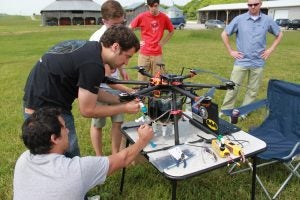
But these kinds of advancements only help farmers who are currently farmers. Those with practical knowledge of, and experience with, agricultural production. What about the person who has no agricultural background but wants to farm? Where do they get their practical experience?
Dr. Ayman Mostafa from University of Arizona Extension argues that practical degrees do exist — they just aren’t very glamorous and are, therefore, bypassed by potential students.
“How many high school students dream of being an agronomist, irrigation specialist, entomologist, [agricultural] economist, [agricultural] engineer, or any related professions? It’s mostly students who [have an agricultural] background, and they are small by proportion of population,” Mostafa said.
And it’s a vicious circle. Without staff and faculty with experience in these jobs, there’s no one to teach these more practical skills. With no one learning the skills, there’s no one to eventually teach them. It’s a catch-22. Mostafa believes that universities — and land-grant universities in particular — need to make a greater effort to make space for these types of degrees and to promote them more effectively.
Basically, what I think we have here is a marketing issue.
“However,” Mostafa said, “universities are mirrors of their societies, and the issue is more of a societal one. Degrees and professions like I just mentioned are so important to the very basic needs of our society, yet a vast majority of the population has no idea about them. That’s the big problem here.
“Even the vision of agriculture is not that good in the eyes of public opinions. Despite being a phenomenally successful sector, very regulated like no other sector, and meeting the demands of society with even diminishing population and resources, it’s still being tarnished by the very populations it serves,” he said.
Dr. Amber Hauvermale, Research Assistant Professor in the Department of Crop and Soil Sciences at Washington State University, believes that the disconnect is not one-sided.
“It moves in both directions and has been shaped in some ways by shared pressures that impact producers and academics, including limited access to resources, time, and money.”
In light of this, she has made it a point to approach her research objectively with other people’s perspectives in mind, to seek out input from industry professionals, to be a good listener and be transparent, to be open to different ideas and paths, and to be an active part of a community of people with broad expertise.
Hauvermale acknowledges that there’s work to be done in getting coursework to address the practicalities of agricultural production.
“There is definitely room for improvement when it comes to aligning required coursework at universities to the needs of [agricultural] graduate students, especially for those considering becoming first time farm owners/producers, especially in a continuously changing [agricultural] landscape.”
She is, however, heartened by the move of higher education toward certificate programs and coursework specifically created for agricultural producers.

The U.S. Department of Agriculture’s National Institute of Food and Agriculture and Purdue University report a high demand for agricultural jobs requiring college education. There is a projected 54,900 agricultural jobs annually that will be in demand from 2020-2025. This is a 2.6 percent increase from the last five years.
Their report also shows that degrees in animal sciences, agricultural education, agricultural communication, and veterinary medicine are earned, or being earned, by women in particular. Conversely, degrees such as agricultural engineering, forestry, agronomy, and crop science are more commonly earned, or being earned, by men. Overall, women have tended in the last two decades to have a higher matriculation rate in degree programs related to food, agriculture, renewable natural resources and the environment.
“Expect to see strong employment for specialists in marketing, e-commerce, field technical service, water quality and environment, climate and invasive species, food technology, and environmental and rural policy,” they said in the report, titled Employment Outlook is Promising for New College Graduates in Agriculture.
So there’s hope. If the jobs in high demand in the agricultural industry require college degrees, the basic tenets of supply and demand will start to sort things out. As we look to the future of agricultural, it’s going to be important for every corner of the industry to get on board. Higher education will never be a place to gain the practical knowledge a producer will need.
At its core, academia is progressive and focused on innovation and research. And the industry needs that, too. But college is expensive and not for everyone. The sharing of knowledge does not have to be limited to schools. Practical knowledge is out there, waiting for you to find it.
Farm on.
Brianna Scott is a veteran farmer who lives in Eastern Washington and earned her Master’s of Science in Agriculture from Washington State University. She is active in the veteran ag community and raises poultry and livestock while growing a large market garden.