




The sagebrush steppe in America’s western states is an important ecosystem for biodiversity and ranching economies. Amid a rapidly accelerating fire season, U.S. Department of Agriculture researchers are investigating the best practices for growing and regrowing forage in sagebrush rangelands and range sheep systems in the Intermountain West.
Hailey Wilmer, range management specialist with the Agricultural Research Service Range Sheep Production Efficiency research unit in Dubois, Idaho, is among those working to promote biodiversity and improve the efficiency of range sheep production.
“Fire is an important natural disturbance that has been managed by humans for thousands of years, including on the vast sagebrush ecosystem across the western United States,” Wilmer said. “However, fire can interact differently with rangelands [comprised of different plant species] under different climatic conditions.”
Sagebrush ecosystems throughout the West are important grazing areas for cattle and sheep ranchers. According to Wilmer, fire is used to shape the area’s habitat for wildlife and forage conditions.
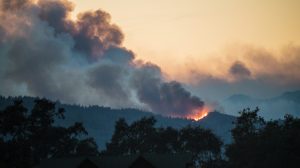
“Fire and grazing are both important ecological processes that interact to shape plant community composition and structure and, therefore, shape hydrology, succession, and forage resources and habitat for livestock and wildlife,” Wilmer said. Succession is the sequence through which plants re-enter a region after a fire strips it of vegetation.
In normal operations, ranchers may mix and match fire and grazing to achieve their desired forage resources within a region. For example, livestock managers in the Great Plains, which are very resilient to fire and grazing disturbances, use grazing after prescribed (planned and managed) burning to improve livestock diet quality and promote desired habitat conditions. Less is understood about how systems in the Upper Intermountain West respond to fire and subsequent grazing.
However, Wilmer said, on many lands in Western states, the “rule of thumb” has been that livestock should not graze an area for two years after a fire. This approach is believed to reduce unwanted shifts in plant production, including introducing invasive or non-native species. However, removing livestock from areas that have experienced wildfire or prescribed fire for two years can be financially taxing for ranchers.
Her study, “Effect of burn season and grazing deferment on mountain big sagebrush plant communities,” examined the fire-grazing interaction in eastern Idaho.
The four-year experiment compared the effects of fire and grazing deferment. After four years, researchers saw an expected reduction in shrub cover in burned areas compared to unburned but no significant increase in invasive plants on either burned or unburned land.
“While we noted subtle shifts in plant communities overall, we found no evidence that grazing deferment for 1 or 2 years affected plant community composition relative to areas grazed the season after fire,” Wilmer said.
“These results are a good sign that the sagebrush system we are working in is relatively resilient to the interactive effects of fire and grazing,” Wilmer explained. “This is likely because of the disturbance history of the system; it is relatively wet and cold and has historically had both moderate grazing pressure and fire intervals. So, the “rule of thumb” that grazing should be removed for 2 years after a fire may not be appropriate in this system.
“Rangeland-based sheep producers depend on the forages that native rangelands provide to feed their sheep throughout the year,” Wilmer said. “The more diverse those plant communities are across the landscape, the more flexibility producers have [when it comes to adapting] to differences in weather and conditions. They also provide high-quality forage to support food and wool production.”
Other forms of biodiversity also make these ecosystems what they are. Managing sagebrush rangelands also conserves more than mule deer, elk, and sage grouse, but also a suite of other species. Biodiversity also draws visitors for recreation and people to live in the area.
“The future of these systems is going to depend on our ability to keep learning about them and connecting with them — to be increasingly responsive to their dynamics and to work across disciplinary boundaries to find solutions that work for people and nature,” Wilmer said.
The preservation and management of sagebrush steppe ecosystems will continue to be a critical endeavor. By integrating traditional practices with modern scientific understanding, ranchers can sustain both their livelihoods and the ecological richness of the region. Moving forward, fostering collaboration among scientists, land managers, and ranchers will be essential in navigating the challenges posed by climate change and evolving land use demands.
