




Michigan State University’s commuter lot is probably similar to the commuter lot at most schools. It’s a sprawling parking lot on the edge of campus where students can park their cars and hop on a bus that takes them to their on-campus destination. The car bakes in the sun on hot days, and students are blown around on the cold days. It was easily my least favorite part about my first year of law school (mostly the bus part).
The commuter lot also doubles as a tailgating lot in the fall (it’s much more hospitable during that time of year). It was for that reason that I returned to the lot several years after graduating to see something astounding. Michigan State installed solar panels over the entire parking lot, essentially creating covered parking that also just happened to power the school. It was incredible and brilliant.
Now the political leadership in Michigan wants to accomplish the same thing across the state. But unlike Michigan State’s creative approach, the state government is using a power grab. It has stripped zoning control from local governments for any wind or solar energy projects. Instead the Michigan Public Service Commission will wield control over these decisions from the capital city, Lansing.
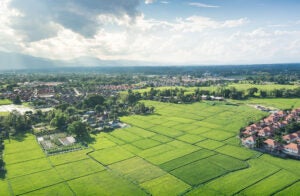
It’s part of a larger plan by Michigan’s Gov. Gretchen Whitmer to transition the state’s energy production to “clean” sources by 2040. To do so, Michigan says it will need 209,000 acres of solar farms. And much, if not all, of that land will come from rural areas.
Numbers like these can be difficult to put in context. So here’s what I figured out. My family farms 2,000 acres in Berrien County, in the far southwest part of the state. Berrien is 1,581 square miles, and according to the U.S. Department of Agriculture, has about 144,000 farmed acres. So the governor’s plan would require all Berrien farms, plus at least another half county, to convert into energy production. It’s a bit staggering.
The problem, according to some politicians, is that many people living in small towns don’t want to see massive wind and solar projects installed in their backyard. The concerns vary, but include decreases in property values, spoiled views, and the loss of prime farmland. My greatest concern is the last one: How many acres of good farmland will be taken out of food production for this transition?
But Whitmer and the Michigan legislature apparently don’t think those local concerns should matter. As Dan Scripps, chair of the Michigan Public Service Commission, says, the state won’t meet its clean energy goals without “siting reforms.” Where local townships once made zoning decisions, Scripps and his agency will now fill that role. If that’s not the heavy hand of big government, I’m not sure what is.

Local control over the use of private property isn’t always perfect. Just ask your friends operating CAFOs (or trying to, at least). Activists often find that riling up local government is easier — with less opposition — than on the state or federal level. And this mob mentality could hinder farmers that want to lease their property to solar and wind companies willing to pay a pretty penny.
So how do we balance local governance, private property rights, and the need for clean energy? Well, perhaps we need to take a clue from Michigan State. Instead of destroying natural areas or farmland, let’s utilize spaces — like overly large parking lots and the tops of buildings — first. Instead of stomping on the wishes of local residents, let’s find ways to install these facilities while still maintaining our rural landscapes (seriously, has no one heard of fence rows and setbacks?). Let’s consider ways to benefit small communities and their residents when they successfully find compromises on these issues. Seriously, we can accomplish all of these things.
And if we aren’t sure how, Spartans will. (Come on, I couldn’t help myself!)
Amanda Zaluckyj blogs under the name The Farmer’s Daughter USA. Her goal is to promote farmers and tackle the misinformation swirling around the U.S. food industry.