



In early 2024, the U.S. Department of Agriculture’s Equity Commission completed its final recommendations to the agency, signing on to hope — hope toward an advancement of equitable policy and practice changes within the federal department and its future service to the United States’ underserved agricultural communities.
Led by Co-Chairs Dr. Jewel Bronaugh, former USDA deputy secretary; Etharin Cousin, representative of Food Systems for the Future; and Arturo S. Rodriguez, representative of the United Farm Workers, the Equity Commission was established to provide recommendations to the USDA on how the federal agency can better serve their underrepresented communities within and outside the USDA — while also dismantling the inequitable policies and practices that keep many underrepresented communities oppressed within the agriculture industry sector.
The committee consisted of two subcommittees, Agriculture Subcommittee and Rural Community Economic Development Subcommittee, with a total of 51 members from all underrepresented groups and represented agriculture businesses within our country. After multiple meetings held by each subcommittee, recommendations from each stakeholder apart, and six public meetings to garner broader perspective, the committee shared a 91-page document with 66 recommendations. Each of these 66 recommendations are quoted to “require renewed commitment from the USDA to improve customer-facing business processes and address historical inequities whose impacts continue to the present moment.”
Even though our country has attributed blatant actions of dehumanizing practices toward the BIPOC community in agriculture, covert wounds and weapons still remain.
At its adolescence, our country served a helping of discriminatory policies that have negatively impacted BIPOC farmers and ranchers from having access to the same resources as other producers. Hundreds of BIPOC farmers and ranchers across our nation still find themselves behind economically compared to their counterparts — counterparts who did not experience the same harsh generational discrimination from loans, resources, and opportunities due to discriminatory policies written by the USDA. These policies still aggregate inequitable practices to purposefully edge BIPOC agriculturalists out, whether intentional or not of this current generation of USDA leaders.
“We can’t keep claiming ignorance,” is what I hear echoing through the pages of these recommendations.
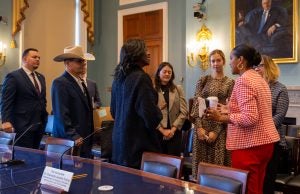
“Our recommendations are rightfully focused on underserved farmers, ranchers, rural communities, and other eligible USDA program recipients,” the co-chairs said in their letter to the secretary of the USDA. “We also strongly emphasize that our work is ultimately aimed in making the USDA a better institution for every American.”
The recommendations fall under the following categories, each addressing vital areas of struggle or a barrier needing addressed by the USDA (in no particular order of importance):
- Advancing Department-wide Equity
- Working with Farmers and Ranchers Day-to-Day
- Supporting Farmworkers and Their Families
- Strengthening Research and Extension Programs
- Ensuring Equitable Nutrition Assistance for Those in Need
- Recognizing Immigrants and Their Families
- Revitalizing Rural America: A Path to Equitable Growth
- Enhancing Rural Development Operations
- Supporting Rural Communities
- Strengthening Rural Economics
Not to over simplify, but a quick synopsis of the intention of this document is: The Equity Commission’s final report intends to create institutional changes departmental wide toward equity among the USDA’s staff and organizational structures, farmers and ranchers systems of access to resources and funds, support to farm workers and their families monetarily and legally, research behind the historical inequitable practices recorded and easily accessible to those needing to see it, extension programs being highlighted and supported more, ensuring equitable food assistance for all those living in this country, finding ways to recognize immigrants and their families within the USDA’s policies and practices, and supporting and strengthening rural communities and their economics.
After the final report was released, the USDA incorporated the document into its USDA Equity Action Plan. At present, the USDA plans to engage the internal stakeholders (staff, departments, extensions, etc.) and the external stakeholders (farmers, ranchers, consumers, etc.) at regional equity convenings across the country through 2024. The intended outcome for these convenings are to display to the country’s attendees real live examples of the work spoken of being put into practice. The convenings are also designed to provide a space for more discussions on the issues being addressed in the USDA Action Plan and the final report of the Equity Commission to continue to be fleshed out and discussed.

These issues can take on many forms and hybrids as we work through covert racism and discrimination behind certain policies and practices. However, by including the community these policies and practices impact in more public forums and discussions, USDA leaders are able to stay on point with what is occurring currently in underserved communities in agriculture as a result of their efforts or downfalls.
There are a wide variety of recommendations, and if we stand back and look at those communities represented on the committee, one might feel that many boxes are being checked off.
Take a look at the subscript for each category. Are there some opportunities to include other underrepresented groups in the recommendations? Are the opportunities currently included in these recommendations specific enough? Attainable enough? If we actually walk the walk on these recommendations, would we see the change we desire of our federal department, or are there still compounded issues in our country that may stifle the work and have the commission go back to the drawing board?
Just as the commission does, I figuratively sign on in hope that these recommended changes described by the commission do get applied.
Bre Holbert is a past National FFA President and studied agriculture science and education at California State-Chico. “Two ears to listen is better than one mouth to speak. Two ears allow us to affirm more people, rather than letting our mouth loose to damage people’s story by speaking on behalf of others.”