



When you hear about the “food system” what do you think of? While it may seem like an abstract or complex topic, the food system is simply everything that comprises food production, processing, transportation, and consumption. In other words, it’s the entire process that food takes from farm to table.
This doesn’t mean that the food system is simple; it’s actually quite complex. In fact, millions of people in the United States work somewhere in the food system.
A definition used by the U.S. in its Global Food Security Strategy goes into the depth of the food system by saying, “Agriculture and food systems are the intact or whole unit made up of interrelated components of people, behaviors, relationships, and material goods that interact in the production, processing, packaging, transporting, trade, marketing, consumption, and use of food, feed, and fiber through aquaculture, farming, wild fisheries, forestry, and pastoralism. The food and agriculture system operates within and is influenced by social, political, economic, and environmental contexts.”
There’s certainly a lot to digest there! So, here’s a high-level look at some of the major components of the U.S. food system and how it works, and ending with one big question: Is our food system safe and secure?
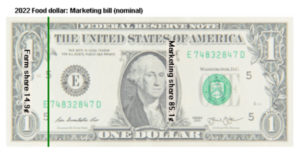
The first part of the food system is production. If you’re a farmer or rancher (or even if you’ve had a sizable garden), chances are you’re pretty familiar with this part of the system. Production comprises everything that gets food ready to leave a farm or ranch. One interesting fact is that farmers receive only 14.5 cents out of each dollar spent on food. United States agriculture is also efficient — on average, a farm produces enough food to feed 166 people each year.
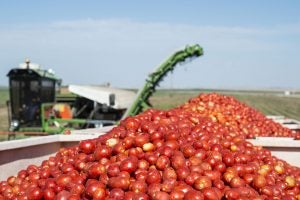
Processing is the next part of the system. Let’s correct one little misconception before we go any farther. All food is processed! All food undergoes things like cleaning (fruits and vegetables), some food is cut down smaller (baby carrots), and some food requires much more involved processes with many steps. Some foods like milk undergo important processes but don’t change the product’s look or taste. Commercially available milk undergoes pasteurization and homogenization, which makes our milk safe to drink and ensures that the cream won’t separate from the milk.
Many of our food processes today are completed with safety and health in mind. Our food undergoes extremely strict testing to make sure that everything is safe.
Up next is transportation. All food needs to be transported from where it is produced and processed to stores and restaurants around the country. In the United States, we are lucky to have fast transportation and readily available local foods.
The last part of the food system is consumption. The U.S. food system offers a wide variety of options. Everyone eats, and it takes a lot to bring food to the consumption stage at restaurants, stores, and houses across the world!
With all of the people our food goes through and the traveling it does, it’s not unexpected to ask the important question: Is our food system safe and secure? Answer: Yes, it is!
The United States has one of the safest food systems in the world. There are several government organizations devoted to ensuring the safety of our food system. The U.S. Department of Agriculture (USDA), the Food and Drug Administration (FDA), and the Centers for Disease Control and Prevention (CDC) play important roles in food safety and food labeling. In fact, food labels are another key part of the system and are intended to display important and accurate information.
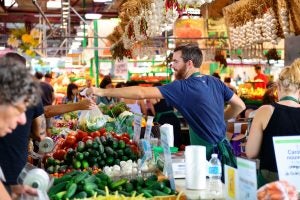
A strong food system isn’t just nice to have, it is a necessary matter of national security. Whether they realize it or not, everyone is a part of the food system. Those who work in the food and agriculture industries play a more key role, while everyone plays the role of consumer. The food system can be thought of simply as everything that happens from farm to table, but there are many moving parts to the food system.
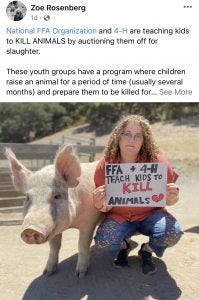
Some people think the food system is broken. If you start searching the phrase “is the food system,” Google will fill in the rest with the word “broken.” People without an inside knowledge of agriculture think that food is heavily processed, farmers and ranchers don’t care for animals and the environment, and that overall, the food system is “broken.” This couldn’t be farther from the truth!
The food system has been continually improving. Advancements in technology, processing procedures, and production methods are decreasing the entire food system’s environmental impact and increasing its productivity and efficiency. Our food system is vital for national security, more efficient than ever before, and provides a wide variety of safe and healthy food options at a lower cost than almost anywhere else in the world.
Michelle Miller, the “Farm Babe,” is an internationally recognized keynote speaker, writer, and social media influencer and travels full time to advocate for agriculture. She comes from an Iowa-based row crop and livestock farming background and now resides on a timber farm in North Central Florida.